Home › Municipal and Infrastructure Concrete
Municipal concrete in Madison, WI includes sidewalks, curbs, intersections, and transit facilities. We partner with public agencies and primes to deliver durable infrastructure concrete that meets specs. Count on experienced crews for your public works projects.
Superior Concrete Madison provides professional municipal concrete throughout Madison, WI, Wisconsin and the surrounding area. Our licensed, insured crew delivers safe, clean, on-time work with a free estimate before anything begins. Call (608) 447-6820 or request your free quote.
Municipal Concrete Built for Madison’s Streets and Public Spaces
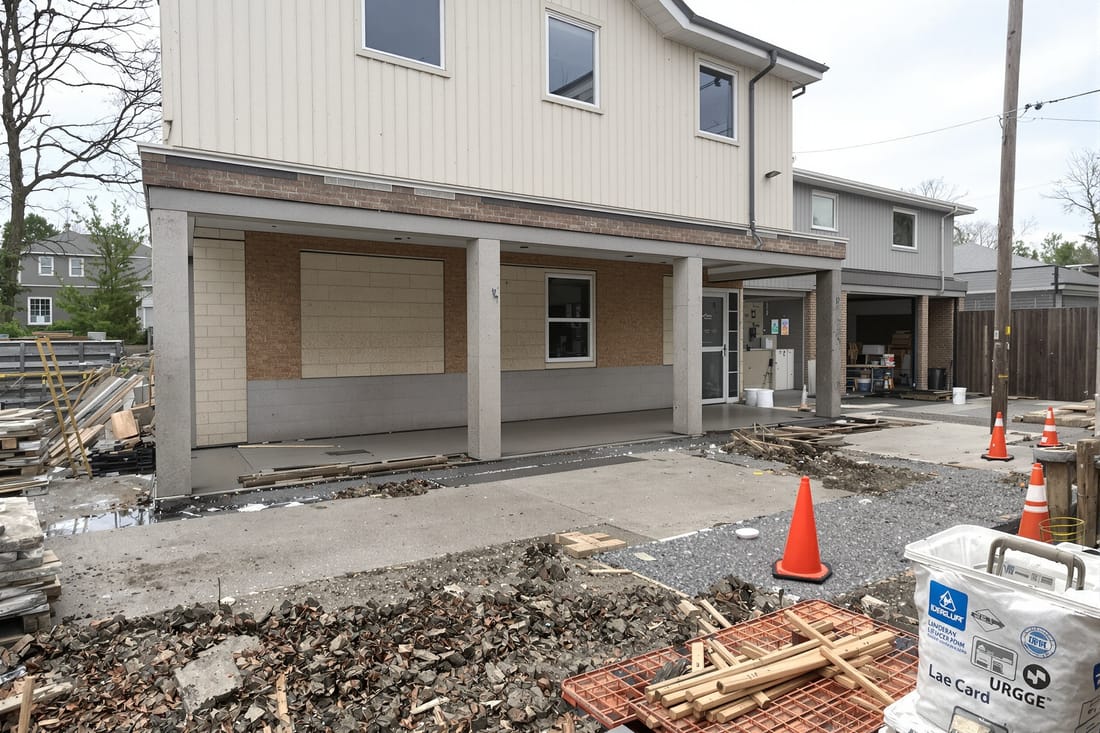
Municipal and infrastructure concrete work in Madison is different from residential or light commercial work. Loads are heavier, traffic is constant, and the City of Madison has strict standards for thickness, reinforcement, ADA compliance, and long-term durability. At Superior Concrete Madison, our crews work specifically with municipal specifications, DOT requirements, and local inspectors, so projects can move forward without delays or rework.
Most municipal concrete we install is either Wisconsin DOT spec or City of Madison standard spec. That means using properly graded aggregates, low water-to-cement ratios, and air-entrained mixes that handle freeze-thaw cycles and road salt. We regularly coordinate with city engineers to review plans before breaking ground, confirm subgrade prep details, and finalize joint layouts and curing requirements. That coordination up front saves time and change orders later.
We handle a full range of municipal concrete needs: streets and intersections, curb and gutter, ADA ramps, bus pads, roundabout aprons, sidewalks, multi-use paths, alleys, parking lots and utility access structures. Whether the work is part of a full street reconstruction in an older Madison neighborhood or a smaller repair to fix heaving panels near a school or bus stop, we plan the pour around traffic, school schedules, and utility work so disruption is minimized.
How Municipal Concrete Projects Actually Get Built
A typical municipal concrete project in Madison starts with field verification. Superior Concrete Madison walks the site with plans in hand, checks elevations, confirms where utilities are located, and identifies any conflicts that could affect drainage or formwork. In older neighborhoods like near the Isthmus, we often find mismatched curb heights or shallow utilities, so we flag those before excavation.
Next comes removal and subgrade prep. We saw-cut existing pavement, remove concrete or asphalt, and proof-roll the subgrade. Soft spots get undercut and replaced with compacted base course, usually 1 1/4 inch crushed stone compacted in lifts. For roads and heavy-use areas, we may place geogrid or thicker base if soils are poor or saturated. Proper base prep is the difference between a slab that lasts 30 years and one that starts settling and cracking in a few winters.
Formwork and reinforcement follow. We set stringlines or laser levels to ensure correct crown and slopes to inlets. Forms are braced to withstand the weight and vibration of municipal concrete trucks and equipment. Depending on the plans, we install rebar mats, dowel baskets across joints, and tie bars at curbs or adjacent panels. For intersections, bus pads, and approaches to bridges or culverts, reinforcement is often heavier to handle braking loads, plow impact, and occasional overweight vehicles.
Before the pour, we confirm mix designs and placement methods with the batch plant. Municipal concrete is usually a higher strength mix, often 4000 psi or above, with specific air entrainment and slump ranges. On site, we take test cylinders and slump and air readings when required by the spec or inspector. During the pour, our crew consolidates concrete with internal vibrators where appropriate, and we use straightedges, screeds, and floats to achieve the right profile and surface texture for traction and drainage.
Curing is not an afterthought. We apply curing compound or use wet cure methods as specified, and we protect early-age concrete from dehydration, rain damage, or rapid temperature swings. In Madison, that often means planning pours around afternoon thunderstorms in summer and cold snaps in spring and fall, or tenting and heating certain pours when necessary.
Design Choices, Mix Options, and Surface Treatments
Even within city or DOT standards, there are real choices that affect how municipal concrete performs and looks. Superior Concrete Madison works with project engineers to choose the right slab thickness, joint spacing, reinforcement type, and surface finish for each location instead of just copying a default detail.
For pavements and intersections, options include plain concrete pavement with doweled contraction joints, continuously reinforced concrete in special cases, or thickened-edge designs at catch basins and manholes. On sidewalks and multi-use paths, joint spacing and slab thickness can be adjusted based on subgrade conditions, tree root concerns, and whether the path serves bikes and maintenance vehicles.
Mix designs can be tailored as well. Air-entrained mixes are standard to handle freeze-thaw cycles and deicing chemicals used on Madison streets. Aggregate choices and water reducers can help reduce shrinkage cracking, while higher early strength mixes are sometimes selected where a street or lane needs to reopen quickly. In some municipal projects, we incorporate supplementary cementitious materials like fly ash or slag to improve durability and reduce permeability, which is useful where there is constant exposure to chlorides and moisture.
Surface texture is another important choice. For streets, bus pads, and intersections, we normally use transverse or longitudinal broom finishes that balance traction with plow smoothness. On ADA ramps, we install truncated dome detectable warning surfaces, making sure placement, color, and alignment match City of Madison accessibility standards. For downtown sidewalks or civic spaces, we can provide different trowel patterns, tooling at joints, or exposed aggregate bands if the plans call for a specific streetscape look.
Drainage and slope design matter more than many people realize. Small grade changes around inlets, crosswalks, and driveways affect how water collects and how ice forms in winter. We use lasers and stringlines to hit those grades accurately, and we review them during layout so that ponding at intersections, bus stops, or crosswalks is minimized.
What Drives Cost and Schedule on Madison Municipal Concrete Jobs
Municipal concrete is budget sensitive, so it helps to understand what actually drives cost. At Superior Concrete Madison, we look at four main factors: scope, access and staging, site conditions, and schedule constraints.
Scope includes thickness, reinforcement, and total area. A simple sidewalk replacement with standard 5 inch thick slabs and minimal reinforcement costs less per square foot than a heavily reinforced intersection or bus pad designed for frequent heavy loads. Special items like decorative scoring, colored concrete, or complex ADA ramp systems add labor and detail work, which affects price.
Access and staging are significant on tight Madison streets. If we need traffic control setups, flaggers, complex detours, or nighttime work to keep businesses and schools accessible, that labor and equipment time adds to the project cost. Working in busy areas like near campus, downtown, or around hospitals often requires more detailed staging and coordination with multiple stakeholders, which can extend project duration.
Site conditions are another driver. Poor soils, high groundwater, or unknown utilities can require more undercutting, thicker base, or engineered fill. In older neighborhoods, surprise utilities or abandoned structures sometimes appear when the old pavement comes out. We plan for contingencies and communicate clearly when field changes are needed so decision-makers can act quickly and keep crews productive.
Schedule and seasonal timing impact both cost and quality. Municipal concrete work in Madison is largely seasonal because concrete does not like being placed in extreme cold or on saturated subgrades. Trying to squeeze a big pour into late fall or very early spring may mean paying for heated enclosures, insulated blankets, and more intensive curing measures. We help project owners balance the desire to open roads fast with the risk of cold-weather placement and the added cost of protection.
To keep budgets under control, we provide realistic phasing plans and identify value options that do not undermine performance. This might include adjusting joint layouts to reduce sawcutting, optimizing reinforcement, or standardizing details across several project segments so forms and processes can be reused efficiently.
Local Challenges in Madison and How We Manage Them
Working in Madison brings a specific set of municipal concrete challenges: freeze-thaw cycles, deicing chemicals, utility congestion, and tight construction seasons. Superior Concrete Madison has adapted our methods and planning to fit these local conditions so infrastructure lasts as long as intended.
Freeze-thaw action and road salt are hard on concrete, especially at intersections, curbs, and gutters where water and slush collect. We address this with proper air-entrained mixes, careful finishing techniques that avoid overworking the surface, and adherence to specified curing periods before opening to heavy traffic. We also pay attention to joint sealing details where required, to limit water and chlorides entering cracks and joints.
Utility congestion is common in older parts of Madison. Water, sanitary, storm, fiber, and gas lines can be stacked tightly below the pavement. Before demolition, we coordinate locates and review as-built drawings, then adjust our excavation depth, base thickness, and formwork to avoid damaging or exposing utilities. When manholes, inlets, or valve boxes sit within the slab, we set them carefully to final grade and form around them so the finished pavement transitions smoothly without dips or unsupported edges.
Traffic and public safety are always front of mind. That means clear signage, proper barricades, and clean edges between new and existing pavement. In school zones and near parks, we stage work so pedestrian routes remain safe and ADA compliant during construction. For larger projects that phase traffic around the work zone, we coordinate lane shifts and closures so emergency access is maintained at all times.
Scheduling around Madison weather is part of our process. We track forecasts closely, plan pours for windows with stable temperatures, and avoid placing municipal concrete just before a heavy rain or overnight freeze. When conditions are marginal, we use blankets, windbreaks, and adjusted curing methods to protect the work, or we reschedule if the risk to long-term performance is too high.
By combining local experience with careful planning and straightforward communication, Superior Concrete Madison helps cities, towns, and agencies in the Madison area keep streets, sidewalks, and public spaces in solid, long-lasting concrete service.