Home › Concrete Slab Foundations and Flatwork
Quality concrete slabs in Madison, WI start with proper prep and reinforcement. We pour level, durable slabs for garages, sheds, additions, and patios. Get flatwork engineered to support your structure for years.
Superior Concrete Madison provides professional concrete slab throughout Madison, WI, Wisconsin and the surrounding area. Our licensed, insured crew delivers safe, clean, on-time work with a free estimate before anything begins. Call (608) 447-6820 or request your free quote.
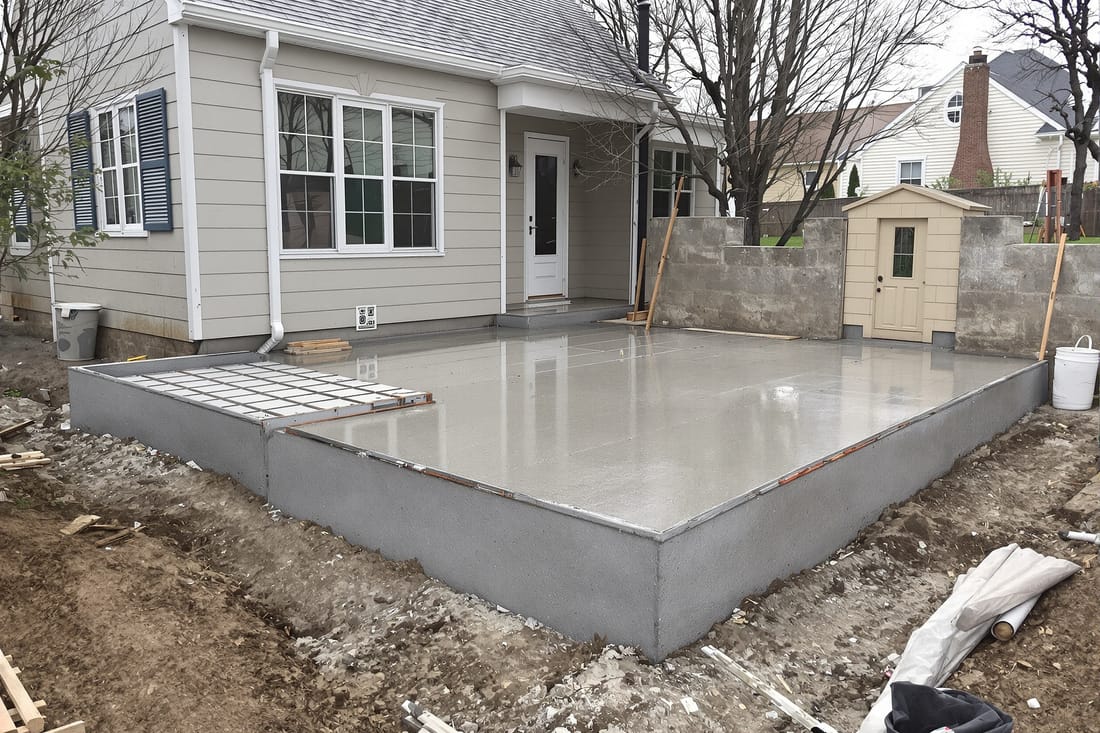
Concrete slab foundations built for Madison homes and businesses
At Superior Concrete Madison, we focus on concrete slab foundations and flatwork that match the way buildings actually perform in Dane County soils and weather. A slab is not just a layer of concrete. It is the structural base that carries your walls, floors, and equipment, and it has to be tailored to our local freeze-thaw cycles, snow loads, and clay and loam subsoils.
For homes and garages in Madison, we typically install monolithic slab-on-grade foundations or thickened-edge slabs that combine footing and slab in a single pour. For light commercial buildings, shops, pole barns, and warehouse spaces, we often recommend reinforced slabs with thickened pads under columns, sawcut control joints that follow the building layout, and vapor control for sensitive interior finishes.
We design with real use in mind. A detached garage storing a fishing boat needs different load capacity than a slab under a woodworking shop with heavy stationary tools. A retail space on East Washington with polished concrete floors needs tighter flatness tolerances than a garden shed in Fitchburg. Our crews look at how you plan to use the space, then size the slab thickness, reinforcement, joint layout, and finishes accordingly, so you do not pay for capacity you do not need or suffer from cracking and settlement later.
How we install a concrete slab that lasts in Wisconsin conditions
Our slab process is straightforward for you, but technically detailed on our end. Everything starts with layout and excavation. We use site plans and physical measurements to set elevations, then remove topsoil and organic material down to stable subgrade. In many Madison neighborhoods the native soil is a mix of clay and silt. If we find soft spots or high moisture, we either over‑excavate and replace with compacted gravel or stabilize the subgrade so the slab does not settle unevenly.
Next we build the base. For typical residential slabs we install 4 to 6 inches of compacted crushed stone or gravel, thicker for drive lanes and commercial spaces. In areas with known drainage issues, like some low-lying lots near the Yahara River corridor, we may increase base thickness and add a drain tile system that routes water away from the slab edge.
Formwork defines the final shape and height of the concrete slab. We set forms to match your finished floor elevation, taking into account garage door openings, thresholds, and future flooring thickness. For heated slabs or interior spaces, we usually install a vapor barrier over the base, then rigid foam insulation around the perimeter and sometimes under the whole slab to improve comfort and reduce energy loss.
Reinforcement is installed before the pour. Depending on design and loads, we use rebar, wire mesh, or structural fiber reinforcement, or a combination of those. In garages and shops we pay special attention to door openings, column locations, and transition areas, placing extra steel where cracks are most likely to try to form.
Pumping, pouring, and finishing your slab or flatwork
Concrete placement is where careful planning pays off. We schedule pours with local ready-mix suppliers whose mixes we know perform well in our climate. For tight backyards on Madison’s older streets, we often bring in a concrete pump to avoid tearing up lawns or driveways with wheelbarrows and heavy equipment.
We select mix designs based on the job. Exterior slabs like driveways, patios, and walkways typically use air-entrained concrete with at least 4,000 psi compressive strength, which holds up better to freeze-thaw cycles and deicing salts. Interior slabs can use slightly different mixes, especially if they will receive polished finishes or heavy floor coverings.
During placement, our crew distributes concrete evenly, works it into corners and around reinforcement, and vibrates or rods it to remove air pockets. Then we screed and bull float the surface to establish a consistent plane. For floors that need to be especially level, such as future workshop floors or commercial spaces, we use straightedges and laser levels to keep everything within tight flatness tolerances.
Finishing depends on use. Garage and interior shop floors often receive a smooth power trowel finish that is easy to sweep and mop. Exterior patios and driveways usually get a broom finish for slip resistance, with edges neatly tooled for a clean look. If you want decorative flatwork, such as colored or stamped concrete around a pool or on a front walk, we integrate color in the mix and use stamping mats and release agents to create the texture you choose.
Planning for Madison’s freeze-thaw cycles, drainage, and cracking
Our climate puts concrete slabs to the test, so we build with those challenges in mind. Freeze-thaw movement is one of the biggest threats to slabs. To reduce heaving and surface spalling, we prioritize proper base drainage, air-entrained concrete for exterior work, and correct slopes so water does not pond on the surface. For patios and driveways, that usually means a minimum slope of about 1/8 to 1/4 inch per foot away from your house and toward a safe drainage area.
No concrete slab can be guaranteed completely crack free, but we can control where and how cracks occur. We carefully plan control joint spacing and layout, usually cutting joints within 12 to 24 hours of the pour depending on weather. The spacing is based on slab thickness and shape. In a typical 4 inch residential slab, joint spacing often falls in the 8 to 10 foot range. Around door openings, re-entrant corners, and inside corners in patios, we add rebar and strategic joints to reduce random cracking.
Deicing salts and snowmelt can be tough on exterior slabs in Madison, especially newer ones. We recommend waiting at least one full winter before using salt on a brand new driveway, using sand instead for traction. We also strongly suggest sealing exterior flatwork after the first cure period and then on a periodic schedule. That added layer helps protect against moisture and chemical intrusion, which extends the life and appearance of the concrete.
For homeowners in areas with known high water tables or spring runoff, we often recommend thicker bases, better drainage paths, and possibly french drains around the slab perimeter. These steps are small compared to the cost of repairing a settled or heaved slab after a few seasons.
What affects the cost of a concrete slab in Madison
Customers often want to understand what drives the price of a concrete slab foundation or flatwork project. At Superior Concrete Madison, we walk you through each factor so you can make informed choices instead of guessing.
The first major driver is size and thickness. A heated garage slab with 5 or 6 inches of concrete and insulation around the edges will cost more than a simple broom-finished patio at 4 inches thick, because it uses more material and labor. Load requirements also matter. If your slab must support a heavy RV, a two-post car lift, or commercial equipment, we may increase thickness, reinforce more heavily, or create thickened pads under specific areas.
Site conditions can affect cost as well. A flat, easily accessible backyard in Sun Prairie is faster to work in than a tight, sloped lot off Monroe Street where access is limited and soil may need extra work. If we find unsuitable soils, such as deep organic layers or saturated clay, we may need additional base material or stabilization to ensure a stable slab.
Finishes and options are the other big category. Simple broom-finished slabs cost less than decorative stamped or colored concrete. Adding radiant in-floor heat, vapor barriers, under-slab insulation, or special joint treatments adds to the material and labor but can significantly improve comfort and long-term performance. During your estimate, we will discuss these options plainly, with line items, so you can see where each dollar goes and decide what matters most for your project.
How Superior Concrete Madison supports you from estimate to final cure
Our goal is to make your concrete slab project predictable and low stress. That starts with a site visit, not just a phone quote. We measure, check elevations relative to existing structures and streets, look at drainage patterns, and talk through how you plan to use the space. That information shapes our written proposal, which outlines thicknesses, reinforcement type, finishes, and any additional features like drains or sawcut patterns.
Once you approve the plan, we schedule work around weather and material availability. Because we work locally, we can keep a close eye on forecasts, which is critical during spring and fall when temperatures swing quickly. On pour day, a site lead walks you through what will happen, where trucks will park, and how we will protect your yard and neighboring properties.
After the pour, proper curing is essential. We typically apply a curing compound or use other curing methods to slow moisture loss so the slab gains strength evenly. We will give you clear instructions on when you can walk on the slab, when to park vehicles, and how to care for it in the first few weeks. For most driveways, light vehicle traffic is allowed after about a week, while full design strength is reached around 28 days.
If you have questions later about sealing, adding coatings, or planning a future structure on the slab, you can call us and talk to someone who has worked in Madison concrete for years, not a call center. Superior Concrete Madison is rooted in this community, so we approach every slab foundation and flatwork project like it will be part of the city for decades, because it will.