Home › Commercial Concrete Slabs and Flatwork
Reliable, professional commercial concrete slab in Madison, WI from Superior Concrete Madison. Contact us today for a free on-site estimate.
Superior Concrete Madison provides professional commercial concrete slab throughout Madison, WI, Wisconsin and the surrounding area. Our licensed, insured crew delivers safe, clean, on-time work with a free estimate before anything begins. Call (608) 447-6820 or request your free quote.
Commercial Concrete Slabs for Madison Businesses
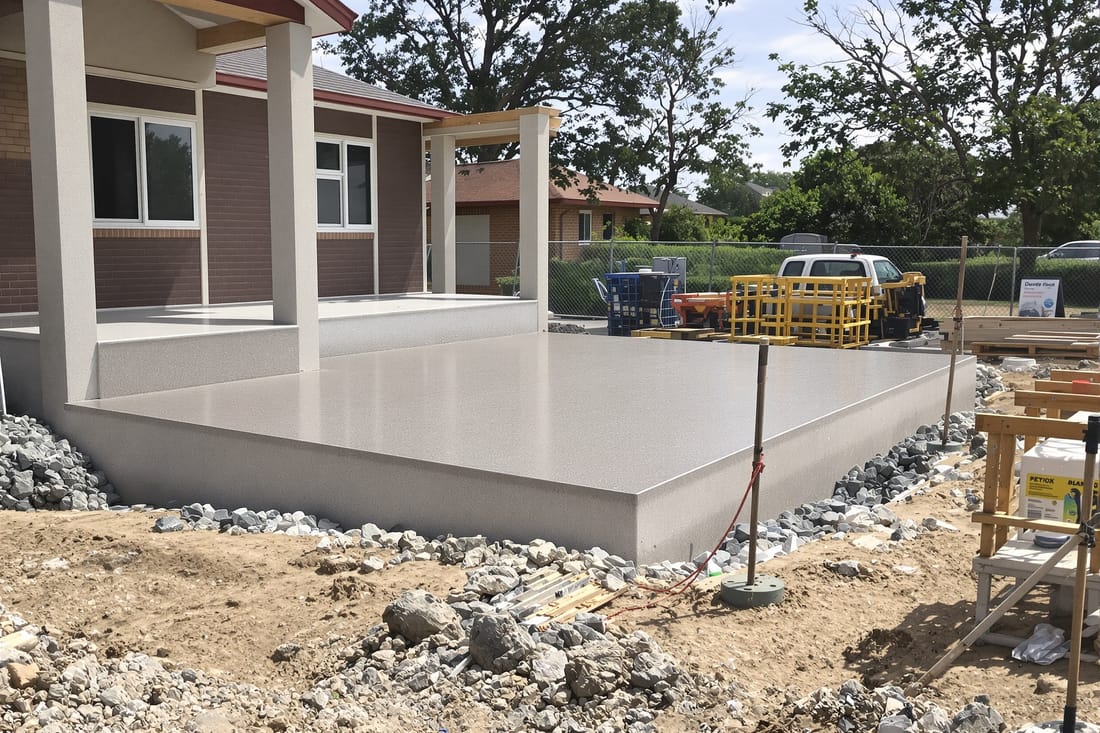
When you pour a commercial concrete slab in Madison, you are not just putting in a floor. You are creating the working surface that has to carry your people, equipment, inventory, and vehicles every day. Superior Concrete Madison focuses on commercial concrete slabs and flatwork that are designed around how your operation actually runs, from forklift traffic to wash-down requirements.
We work with owners, facility managers, and local GCs throughout Madison, Sun Prairie, Fitchburg, and the surrounding communities. Typical projects include warehouse floors, retail and restaurant slabs, light industrial shops, loading dock approaches, dumpster pads, equipment pads, and sidewalks that tie into existing city walks. Our goal is to install slabs that perform through freeze-thaw cycles, salt exposure, and heavy point loads, not just look good on day one.
How We Plan Your Commercial Slab Project
Before we ever set forms, we start with site evaluation and load expectations. A slab for a small storefront on Monroe Street does not need the same section as a manufacturing bay in an industrial park off Stoughton Road. At the initial walk-through, Superior Concrete Madison documents existing grades, access for concrete trucks, drainage patterns, and any problems with frost heave or ponding water you may have noticed in past winters.
We review your intended use: type of racking, forklift axle loads, potential machinery anchor points, and whether there will be moisture or chemical exposure. From there we either coordinate with your structural engineer or, for simpler projects, recommend a slab thickness, base preparation details, and reinforcement layout that fits local soil conditions and building code. In Dane County clay, for example, we often specify a thicker, well-compacted stone base and attention to drainage to keep subgrade moisture under control.
We also look at how the slab connects to existing buildings and pavements. Transitions at dock doors, freezer entries, and storefront thresholds need careful elevation planning so you do not end up with trip hazards or water running into the building during snowmelt.
Materials, Mix Designs, and Reinforcement Options
Commercial concrete slab performance starts with the right mix and reinforcement. For most Madison commercial projects, we recommend a 4,000 to 5,000 psi concrete mix with a low water to cement ratio for durability. Where exterior slabs will see deicing salts or frequent freeze-thaw cycles, we use air-entrained concrete to help control surface scaling in Wisconsin winters.
Reinforcement is chosen based on load and budget. Light duty retail or office slabs may use welded wire mesh to control cracking, while warehouse and shop floors usually benefit from #4 or #5 rebar on a grid, tied and supported on chairs so steel stays in the middle of the slab instead of sinking into the base. For heavy forklift aisles, we may tighten spacing or add extra reinforcement at construction joints and door openings.
We also offer fiber-reinforced concrete mixes, which can improve crack control and impact resistance, especially useful for machine shops and auto service bays. Vapor barriers under the slab are recommended for spaces that will receive floor coverings or moisture-sensitive equipment. In food service or wash-down areas, we can specify integral hardeners or densifiers to increase abrasion resistance and make cleaning easier.
Site Preparation, Forming, and Proper Base Work
Most long term slab problems start under the concrete, not in it. Superior Concrete Madison spends significant time on site prep because our climate and soils demand it. We begin by stripping organic material and soft spots, then proof rolling the subgrade to identify areas that need undercutting or stabilization.
A well graded crushed stone base is placed and compacted in lifts to a specified density. In Madison’s wetter pockets, especially near low lying sites or where high water table is known, we may add drain tile or increase base thickness to move water away from the slab. Proper base thickness will vary, but 4 to 8 inches of compacted stone is typical for commercial flatwork in our area, with thicker sections under dumpster pads and drive lanes.
Forms are set to laser elevations so finished floors tie cleanly into doors, trench drains, and existing concrete. For exterior commercial flatwork such as sidewalks and loading areas, we build in adequate slope (usually 1 to 2 percent) to direct water away from the building and to catch basins, while staying compliant with ADA requirements on accessible routes.
Pouring, Finishing, Joints, and Curing
On pour day, timing and coordination are crucial. We schedule trucks so concrete arrives fresh and keep a close eye on weather, especially wind and temperature swings that are common in Madison spring and fall. We place concrete using chutes, pumps, or buggies depending on access, then strike off and bull float to achieve a uniform surface.
For interior slabs, we typically use a power trowel to achieve a smooth, dense finish suited for forklifts, pallet jacks, or resin coatings. Where slip resistance is a priority, such as loading docks and exterior work areas, we use broom or textured finishes. Control joints are sawcut or tooled at calculated spacing based on slab thickness and panel size, which helps manage where cracks form as the slab shrinks.
Curing is just as important as the mix design. We apply curing compounds or, on some projects, use wet curing methods to slow moisture loss and reduce curling and surface cracking. In cold weather, we use insulated blankets and sometimes temporary heat to keep concrete within the proper temperature range during the early strength gain period. In hot weather, we may adjust pour timings and use evaporation reducers to protect the surface.
Common Problems, Repairs, and Preventive Strategies
Commercial concrete slabs in Madison face repeating freeze-thaw cycles, snow removal equipment, and deicing chemicals. Over time that can mean joint spalling, surface scaling, and random cracking. Superior Concrete Madison designs new slabs to minimize these issues, but we also repair and upgrade existing flatwork that is causing operational or safety problems.
Hairline cracking is normal, but wide or differential cracks can indicate base settlement or poor joint layout. We investigate root causes before recommending repairs, which might include joint re-cutting, epoxy injection, partial depth patching, or slab replacement in localized sections. In high traffic warehouses, we often install joint fillers to protect slab edges from forklift impact and to create a smoother ride for operators.
Preventive strategies include placing the right mix for exterior service, sealing slabs after the initial cure if appropriate, and making sure downspouts and site drainage do not dump water next to slabs where it can freeze and undermine the base. We walk our commercial clients through simple maintenance steps so the slab stays functional and safe as long as possible.
Permits, Scheduling, and Working Around Your Business
Within Madison city limits, most new commercial slabs that are part of a building project fall under your building permit and require inspections for base, reinforcement, and sometimes vapor barriers before pour. For stand alone exterior flatwork like new commercial sidewalks, dumpster pads, or approach slabs that tie into public right of way, separate permits or right of way approvals may be needed. Superior Concrete Madison coordinates with your GC or directly with the City of Madison Building Inspection and Engineering divisions as required, so inspections do not delay your schedule.
We also understand that many commercial projects must happen while you stay open. For retail and restaurant work around State Street, downtown, or busy corridors, we often phase pours, work early or off hours, and establish clear pedestrian detours and signage so customers can still reach you. On industrial projects, we coordinate around production schedules and deliveries to minimize disruption.
Before you hire any contractor for a commercial concrete slab, ask for clear details on slab section, reinforcement, jointing plan, curing approach, and how they intend to protect adjacent operations. Superior Concrete Madison provides that information in writing, including a realistic schedule, cost breakdown based on slab size, thickness, access difficulty, and reinforcement type, and expectations for when you can place racks, machinery, or traffic on the new slab.