Home › Concrete Driveway Installation
Reliable, professional concrete driveway in Madison, WI from Superior Concrete Madison. Contact us today for a free on-site estimate.
Superior Concrete Madison provides professional concrete driveway throughout Madison, WI, Wisconsin and the surrounding area. Our licensed, insured crew delivers safe, clean, on-time work with a free estimate before anything begins. Call (608) 447-6820 or request your free quote.
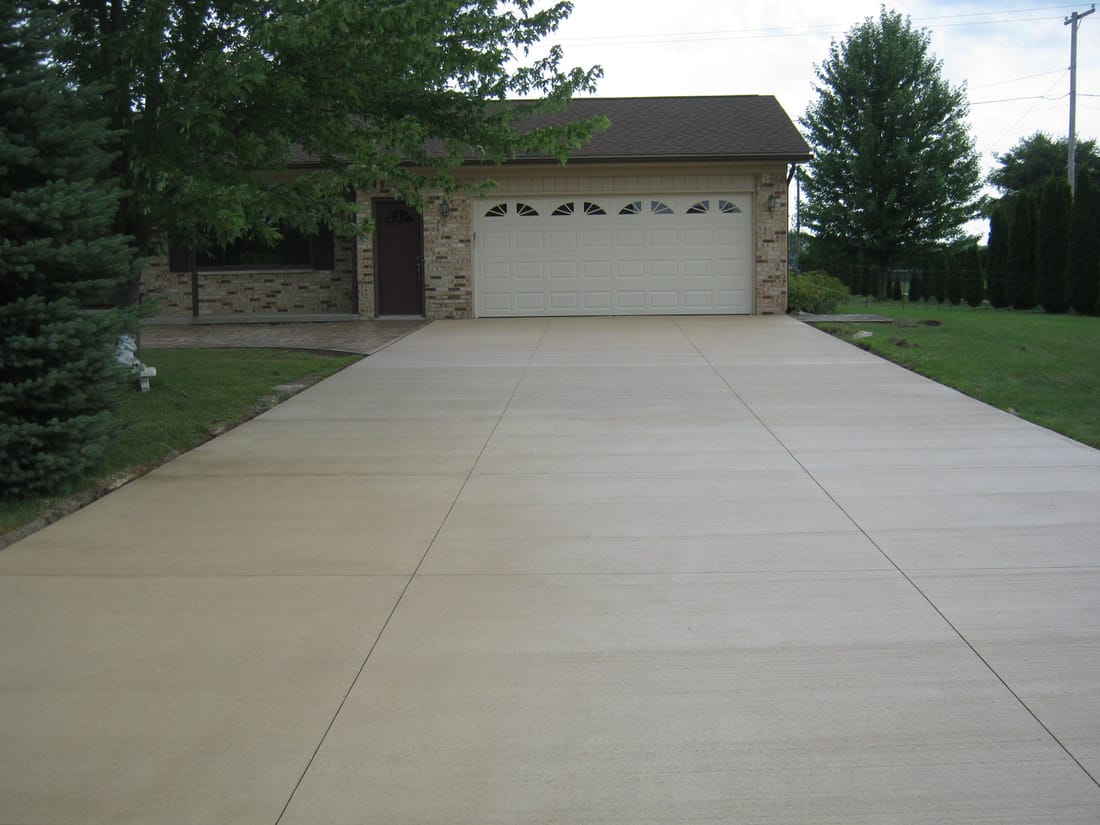
Concrete driveways built for Madison homes and winters
A concrete driveway in Madison has to do more than look good. It needs to stand up to salt, freeze–thaw cycles, and the weight of daily parking in tight residential lots. At Superior Concrete Madison, our driveway work is focused on those real conditions, not on generic designs pulled from somewhere with a different climate.
We work across Madison neighborhoods like East Side bungalows, mid‑century ranch homes in Monona and Maple Bluff, and newer subdivisions outside the Beltline. Each has different setbacks, slopes, and drainage patterns. Before we talk about finishes, we look at how snowmelt will move, how close you are to the sidewalk, and how you currently park and turn around.
For most homeowners, the goal is simple: a driveway that does not heave, rut, or crumble, with a surface that still looks clean in ten years. We design thickness, base prep, and reinforcement around that goal, not around the thinnest slab we can legally pour. Our crews are concrete focused only, so every step, from excavation to final broom stroke, is handled by people who do driveways in Dane County week in and week out.
How we install a concrete driveway, step by step
Our concrete driveway installation process is structured to avoid the common failures you see around Madison, like cracked panels, pooling water, and broken edges at the curb.
1. Site evaluation and layout.
We start by measuring the existing drive, checking property lines, and identifying utilities. In older Madison neighborhoods, it is common to find shallow clay drain tiles or unknown conduits. We use Diggers Hotline and careful probing so excavation does not damage anything hidden. We also check slope with a level or laser to plan water flow from garage to street.
2. Removal and excavation.
If you have an old asphalt or concrete drive, we break and remove it with a skid steer, then haul it to a concrete recycler. We excavate to a depth that allows for a compacted base plus the slab thickness that suits your use, usually 4 to 6 inches of concrete. For heavier vehicles like work vans or campers, we recommend thicker concrete or thicker base.
3. Base preparation.
For Madison’s freeze–thaw conditions, the base matters as much as the slab. We typically install 4 to 8 inches of compacted crushed stone (gravel), depending on soil conditions. On soft or clay-heavy lots, which are common off Cottage Grove Road and in some lake‑adjacent areas, we remove additional soil and bring in more base material. The stone is compacted in layers using plate compactors or rollers until it is firm and stable.
4. Forms, reinforcement, and drainage details.
We set forms to the exact slope needed to shed water toward the street or side yard, not toward your garage. We build smooth transitions to sidewalks and alleys to avoid a lip that catches snowblowers. Depending on design, we install rebar grids or welded wire mesh in the slab. For large drives or where trees are nearby, we may recommend thicker edges or additional reinforcement to resist cracking.
5. Concrete placement and finishing.
We typically pour air‑entrained concrete designed for freeze–thaw durability. Mix designs are chosen for strength and workability, usually 4,000 to 4,500 psi for residential drives. Our crew places the concrete, strikes it off to the proper grade, then bull floats to level the surface. As the concrete sets, we edge the sides and cut in control joints to help manage cracking. The final finish is usually a broom texture for slip resistance in winter.
6. Curing and cleanup.
Proper curing is critical. We apply curing compound or use wet curing methods so the surface does not dry too fast, which can lead to surface flaking. We advise you on when to walk and when to park on the new driveway, usually about 7 days before light vehicles and up to 28 days for full design strength. We complete the job with saw‑cut joints if specified, remove forms, backfill edges, and clean up the site so you can use your new drive without extra work.
Design and finish options for your concrete driveway
Concrete driveways in Madison do not all have to look identical. Superior Concrete Madison can keep things straightforward or tailor the driveway to match your house and yard while still keeping maintenance realistic for our climate.
Finish choices. The standard and most practical finish for driveways here is a medium broom finish. It provides traction in slush and packed snow and hides minor dirt and tire marks. For homeowners who want a more refined look near the street or front walk, we can incorporate a border with a different texture, like a light exposed aggregate strip or a troweled band along the edges.
Color and decorative options. We can add integral color to the mix or apply color hardeners for certain designs. Because de‑icing salts and winter scraping are harsh, we discuss where decorative elements make sense. A common approach is to keep the main drive in standard gray for durability and add decorative concrete only at the apron or at a landing near the front entry. Stamped concrete is possible, but we generally limit heavy stamping on driveways because deeply imprinted textures can hold water and ice.
Layout considerations. Narrow city lots in Madison often benefit from small design adjustments, like a flared section near the street for easier turning, a widened area by the garage doors, or a small parking pad so one vehicle can park to the side without blocking the main lane. On sloped sites, we may recommend a landing area in front of the garage to keep cars level and reduce the feeling of rolling when you shift into park.
Accessibility and snow management. When we design the approach and any transitions to sidewalks or alleys, we account for snow shovels, snowblowers, and plow blades. Gentle slopes, crisp joints, and low lips at the curb or sidewalk make winter clearing easier and reduce chipping from metal edges.
What affects the cost of a new concrete driveway in Madison
Homeowners usually want to understand why driveway estimates vary. We are direct about cost factors so you can see what you are paying for when you choose Superior Concrete Madison.
Size and layout. A straight, standard-width driveway from street to a two‑car garage is the most economical shape. Costs increase when there are additional parking pads, turnarounds, or complex curves. Narrow side‑yard access for equipment can also increase labor time.
Thickness and reinforcement. A basic residential driveway is often 4 inches thick. For heavier vehicles, long drives, or soils with more movement, we may recommend 5 or 6 inches, or thicker edges. Upgrading from wire mesh to rebar, or adding more reinforcement around expansion joints and at the garage slab connection, increases material and labor but provides stronger performance.
Base and subgrade conditions. On some Madison lots, especially where fill was used or where there is a lot of topsoil and clay, we must excavate deeper and install more stone to create a stable base. This is one of the biggest variables in cost, and we explain it on site so you understand what is needed and why.
Access and removal. Removing an old asphalt driveway that is thin and already broken up is straightforward. Removing a thick, reinforced concrete drive or hauling material from tight urban lots where trucks cannot get close adds time and disposal fees. If there are retaining walls, fences, or large tree roots along the drive, we discuss those impacts before work starts.
Finish and options. Decorative borders, integral color, drainage features like trench drains, and special edging details are all optional costs. We line‑item these features so you can decide whether appearance upgrades fit your budget.
Common driveway problems in Madison and how we prevent them
Most of the flawed driveways you see around town have problems that started at installation. Superior Concrete Madison designs and builds with these local issues in mind so you do not repeat the same mistakes.
Cracking. All concrete will crack somewhere, but uncontrolled, random cracks that run diagonally across a slab are usually a sign of poor joint layout or inadequate base. We place control joints at proper spacing for the slab thickness and shape, and we make sure they are deep enough to work as intended. We also pay attention to re‑entrant corners (like where a walkway meets the driveway) since those are common crack starters.
Heaving and settlement. Madison’s freeze–thaw cycles can push up concrete that was placed on poor or wet subgrade. Likewise, if fill soil was not compacted, parts of the drive may sink. We reduce this risk with proper excavation, compacted granular base, and, when needed, thicker sections at the edges and near the garage and street approach.
Surface scaling and spalling. Many older driveways show surface flaking, where the top layer peels away after years of de‑icing salt. To fight this, we use air‑entrained concrete suited to exterior flatwork and manage water and finishing techniques so the surface is not overworked. We also provide clear instructions about when you can begin using de‑icing products on a new driveway.
Drainage issues and icing. Poor slope or low spots can collect water that turns to ice patches. During layout, we check for potential birdbaths and adjust formwork before we pour. We consider how water moves from the roof, downspouts, and neighboring properties, and we may suggest redirecting downspouts away from the drive or adding small drainage features if needed.
What Madison homeowners should know before hiring a driveway contractor
Before you sign with any concrete contractor, there are a few specific points that matter in Madison.
Permits and codes. Depending on your municipality within the Madison area, a driveway replacement or expansion may require a permit or approval, especially if it affects the apron, sidewalk, or curb cut. Superior Concrete Madison helps you understand what applies to your address and coordinates with local rules, including slope and setback requirements.
Timing and weather. Our installation schedule is based on real weather windows. Pouring in late fall or very early spring can be tricky. If conditions are not right, we postpone rather than rush, because cold or wet weather at the wrong stage can damage the surface or slow strength gain. We communicate realistic timelines and keep you updated.
Access during construction. For most residential driveways, the project takes a few days of active work plus curing time. You may need to park on the street for about a week. We coordinate with you on garage access, garbage pickup days, and any special needs such as deliveries or mobility concerns.
Warranty and expectations. We are straightforward about what a concrete driveway can and cannot do. Hairline cracks are normal, and we design to keep them controlled and minimal. We discuss joint locations, expected lifespan, and maintenance steps so you know what to look for from year one to year ten.
Next steps. If you want pricing for your specific driveway, we schedule an on‑site visit, take measurements, check soil and drainage, and then provide a written proposal that explains thickness, base depth, reinforcement, and finishes. That way, when you compare Superior Concrete Madison with other bids, you can see exactly what is included, not just a lump sum price.