Home › Industrial Floors and Specialty Slabs
Industrial concrete floors in Madison, WI must handle heavy loads, forklifts, and specialty uses. We place and finish slabs for manufacturing, cold storage, and food facilities, following strict flatness and durability specs. Keep operations running on reliable concrete.
Superior Concrete Madison provides professional industrial concrete floor throughout Madison, WI, Wisconsin and the surrounding area. Our licensed, insured crew delivers safe, clean, on-time work with a free estimate before anything begins. Call (608) 447-6820 or request your free quote.
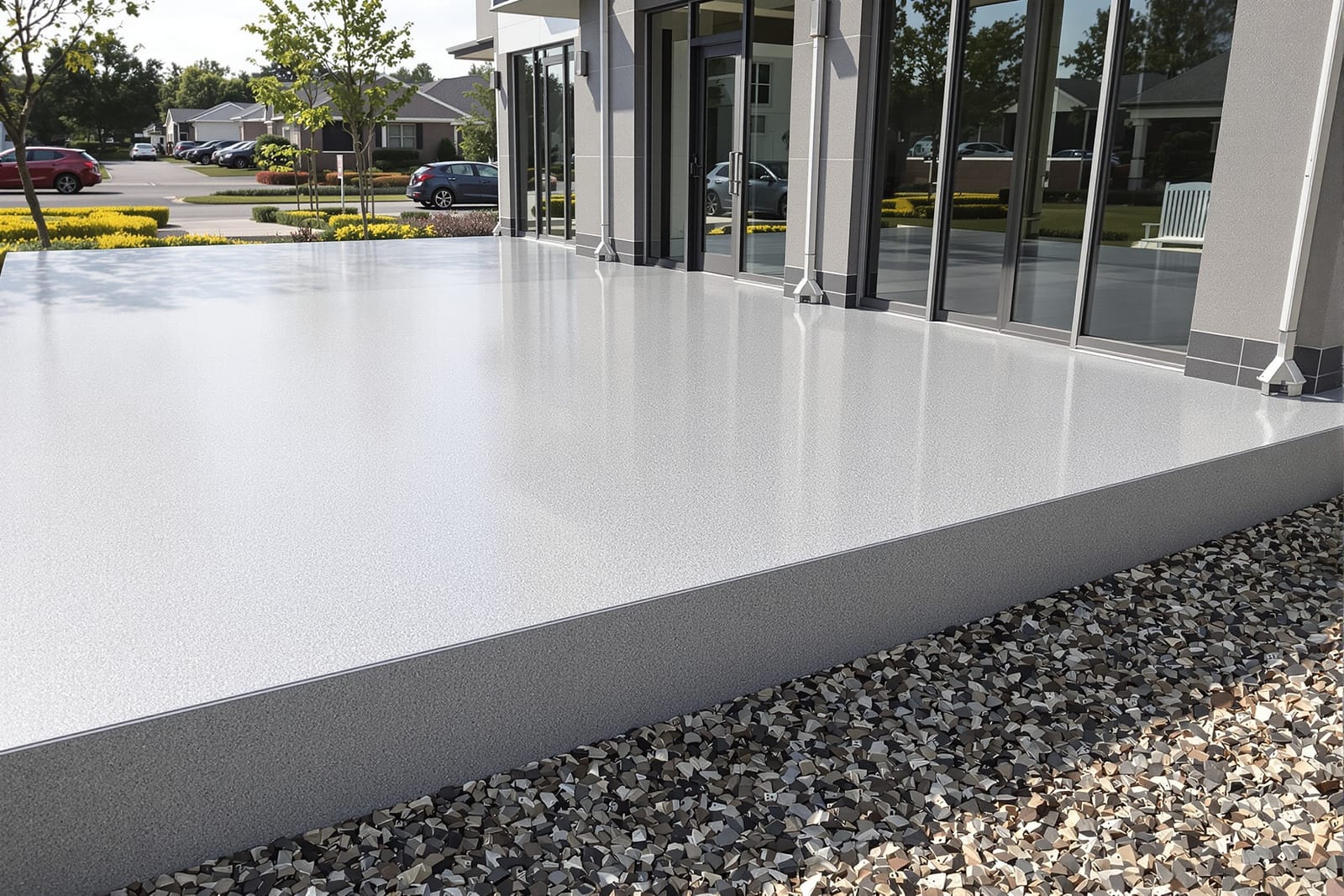
Industrial concrete floors built for Madison facilities
Industrial concrete floors in Madison need to stand up to forklifts, freeze-thaw cycles, chemical exposure, and constant foot traffic. Superior Concrete Madison designs and builds industrial concrete floor systems that match how your facility actually operates, not just what looks good on paper.
We work with manufacturing plants, food processors, distribution centers, labs, breweries, and heavy commercial spaces across the Madison area. Many of these buildings are 1970s or 1980s tilt-up or steel-frame structures with undersized or worn-out slabs. We evaluate the existing structure, soil conditions, and service loads, then engineer a slab that can handle your equipment, storage racking, and future expansion.
From the first site visit, we talk in terms of point loads, wheel loads, joint locations, curl control, and slab reinforcement. The goal is the same on every project: an industrial concrete floor that stays level, resists cracking, and is easy for your operations team to maintain.
How we design an industrial concrete floor that fits your operation
Every industrial concrete floor starts with data. Superior Concrete Madison gathers the information that actually drives performance: soil bearing capacity, forklift tire types, racking layout, expected impact loading, and any planned machinery foundations.
We look at subgrade conditions typical around Madison, such as silty clays and glacial tills, which can pump and shift if they are not compacted correctly. We coordinate with your geotechnical report if you have one, or arrange testing if you do not. Based on that, we specify the sub-base thickness and material, often a compacted crushed stone base that drains well in Wisconsin’s freeze-thaw climate.
Next, we determine slab thickness, reinforcement method, and joint layout. For light to medium industrial use in Madison warehouses, slabs are commonly in the 6 to 8 inch range. Heavy manufacturing, high-bay racking, or equipment lines may require 8 to 10 inch slabs or localized thickened sections. We choose between conventional rebar, welded wire reinforcement, or macro synthetic fibers, and frequently use a hybrid approach.
Joint design is critical in our climate. We balance tighter joint spacing to control cracking with your need for smooth forklift travel. On high-traffic aisles, we may use armored joint systems and dowels to keep slabs level and minimize spalling at joints over time.
Our installation process for durable industrial slabs
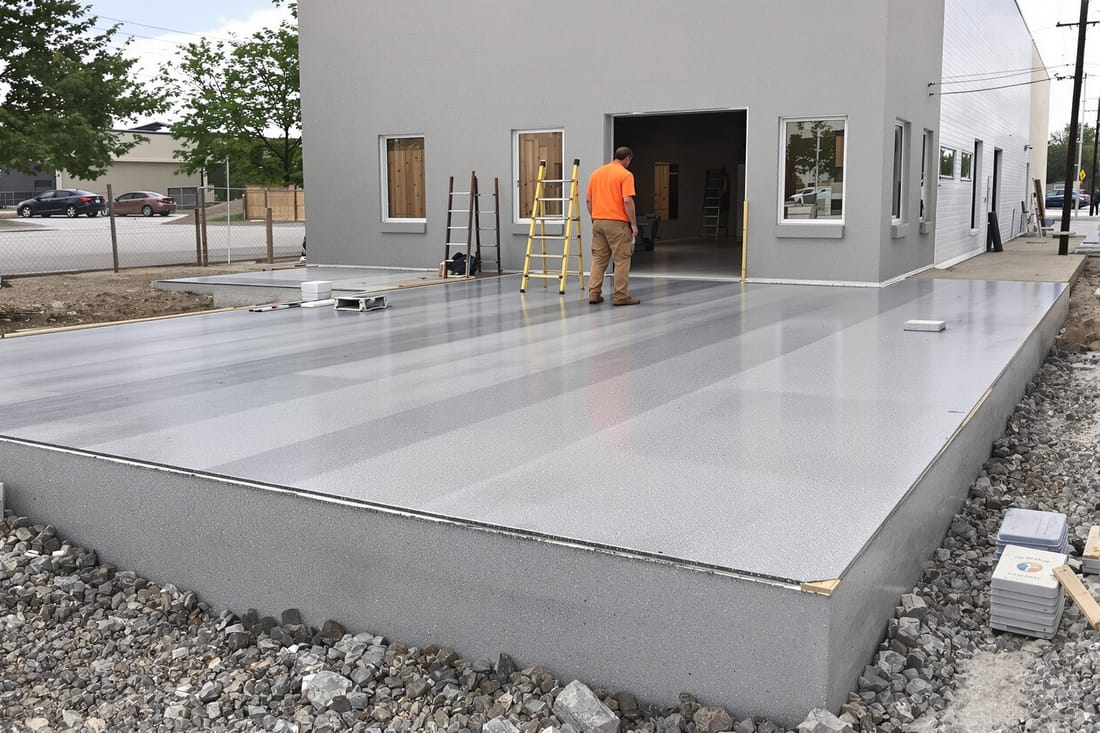
Proper installation is where industrial concrete floors succeed or fail. Superior Concrete Madison uses a step-by-step process that keeps quality measurable at every stage.
1. Subgrade preparation: We strip organics, proof-roll the subgrade, and correct soft spots. In many Madison industrial parks around the Beltline and Highway 51, we encounter fill soils of varying quality. We recompact or replace these with suitable material so your slab does not settle unevenly.
2. Sub-base and vapor control: We place and compact the stone base in thin lifts, checking density throughout the area. Where moisture-sensitive finishes, adhesives, or specialty coatings are planned, we install a vapor barrier meeting the manufacturer’s perm rating, taped at seams and around penetrations.
3. Forming and reinforcement: We set accurate forms, then install rebar, welded wire, or macro fibers per the engineered design. Load-transfer dowels are sized and aligned to keep slabs from faulting at joints. For heavy racking systems common in Madison distribution centers, we pay particular attention to dowel alignment along main traffic aisles.
4. Concrete placement and finishing: We place concrete using laser-guided screeds if flatness requirements call for it, then power float and trowel to the specified finish level. If you need high FF/FL numbers for narrow-aisle or automated systems, we follow strict placing and finishing sequences and test flatness during the pour.
5. Curing and protection: We apply curing compounds or install curing blankets depending on temperature and finish. In Wisconsin’s shoulder seasons, nights can drop quickly, so we plan for cold weather protection to maintain concrete strength gain and reduce the risk of surface dusting.
Specialty slabs for heavy loads, chemicals, and precise equipment
Industrial and specialty slabs often need more than a standard floor. Superior Concrete Madison designs and installs custom slab solutions tailored to specific industrial processes.
For heavy machine foundations and press pads, we may use isolated thickened slabs with deep reinforcement cages, vibration control considerations, and anchor bolt layouts coordinated with your equipment manufacturer. In older Madison manufacturing buildings, we often replace undersized pits or create new machine bases while keeping surrounding production operational.
Chemical exposure is another driver of specialty slab design. Food and beverage processing, dairy operations, and labs around Madison may require integral slopes, trench drains, and concrete mixes that resist acids, cleaners, and thermal shock. We specify mix designs with appropriate cementitious materials and aggregates, then install compatible coatings or toppings, such as epoxy, urethane cement, or polished concrete with densifier, depending on your sanitation and slip-resistance needs.
Where very flat or superflat floors are needed for automated storage and retrieval systems, we follow strict placement strips, continuous pours, and specialized finishing techniques. We measure floor flatness and levelness as we go so adjustments are made in real time, not discovered after the racks are in place.
Material options and finishes for industrial concrete floors
Although performance comes first, you still have finish options with an industrial concrete floor. Superior Concrete Madison helps you choose materials and finishes that fit both your budget and maintenance expectations.
Concrete mix design can include performance admixtures for reduced shrinkage, accelerated or delayed set times for colder weather or complex pours, and corrosion inhibitors where reinforcing steel is critical. In Wisconsin winters, set control is especially important so we can place and finish slabs without cold joints or surface defects.
For surfaces, common options include hard-troweled slabs for warehousing and distribution, lightly broomed textures for wet process areas, and polished concrete systems that are densified and sealed for dust control and easier cleaning. Where color coding of work zones or safety paths is useful, we can integrate colored hardeners or apply industrial coatings that bond properly to the concrete substrate.
Joint treatments and edge details are also part of the finish package. For high-traffic facilities using rapidly turning forklifts, we often install semi-rigid joint fillers after the initial shrinkage phase to protect joint edges and reduce impact on wheels and operators.
Costs, scheduling, and what affects your industrial floor price
Industrial concrete floor pricing in Madison is driven by more than just square footage. Superior Concrete Madison explains costs up front so you can match the design to your budget and operational needs.
Key cost drivers include slab thickness, reinforcement type, required flatness/levelness, subgrade correction needs, specialty coatings or toppings, and how much work must be done around existing operations. A basic warehouse slab with moderate forklift use and minimal coatings will cost significantly less per square foot than a superflat floor with chemical-resistant toppings and heavy machine pads.
Schedule also affects cost. Weekend or overnight pours in active Madison facilities can reduce your downtime but may require additional labor and lighting. In cold months, winter conditions require heated enclosures, ground thaw, and admixtures, all of which add cost but are often necessary to avoid long-term slab problems.
We typically start with an on-site assessment, then provide a detailed scope that separates essential structural requirements from optional performance upgrades. This allows you to phase improvements, such as installing a high-performance coating or joint filling later, while still getting the structural slab you need now.
Why Madison contractors choose Superior Concrete Madison
Industrial concrete floors are long-term infrastructure, not just another finish. Contractors, plant managers, and facility owners in Madison work with Superior Concrete Madison because we treat these slabs like the structural systems they are.
We have experience tying new industrial slabs into older concrete in Madison’s mixed-age industrial areas, where existing buildings may have unknown reinforcement, variable joint spacing, or past patchwork repairs. We use sawcut exploration, radar scanning when needed, and careful detailing to reduce reflective cracking and slab movement at transitions.
During construction, we coordinate closely with your general contractor, racking vendor, or equipment supplier to make sure anchor locations, penetrations, and slopes are correct the first time. Our crews are used to working in tight sites, near active docks, and in facilities that must keep partial operations running.
Before you commit to any industrial concrete floor, we recommend that Madison owners request engineered slab designs, ask for sample flatness/levelness results from past projects, and clarify curing and protection plans for local weather. We are prepared to walk you through each of these items so your floor performs as expected for decades.