Home › Concrete Garage and Shop Floors
A solid concrete garage floor in Madison, WI stands up to vehicles, tools, and spills. We pour new garage slabs, replace failing floors, and prep surfaces for coatings. Get a level, crack resistant floor for your garage or shop.
Superior Concrete Madison provides professional concrete garage floor throughout Madison, WI, Wisconsin and the surrounding area. Our licensed, insured crew delivers safe, clean, on-time work with a free estimate before anything begins. Call (608) 447-6820 or request your free quote.
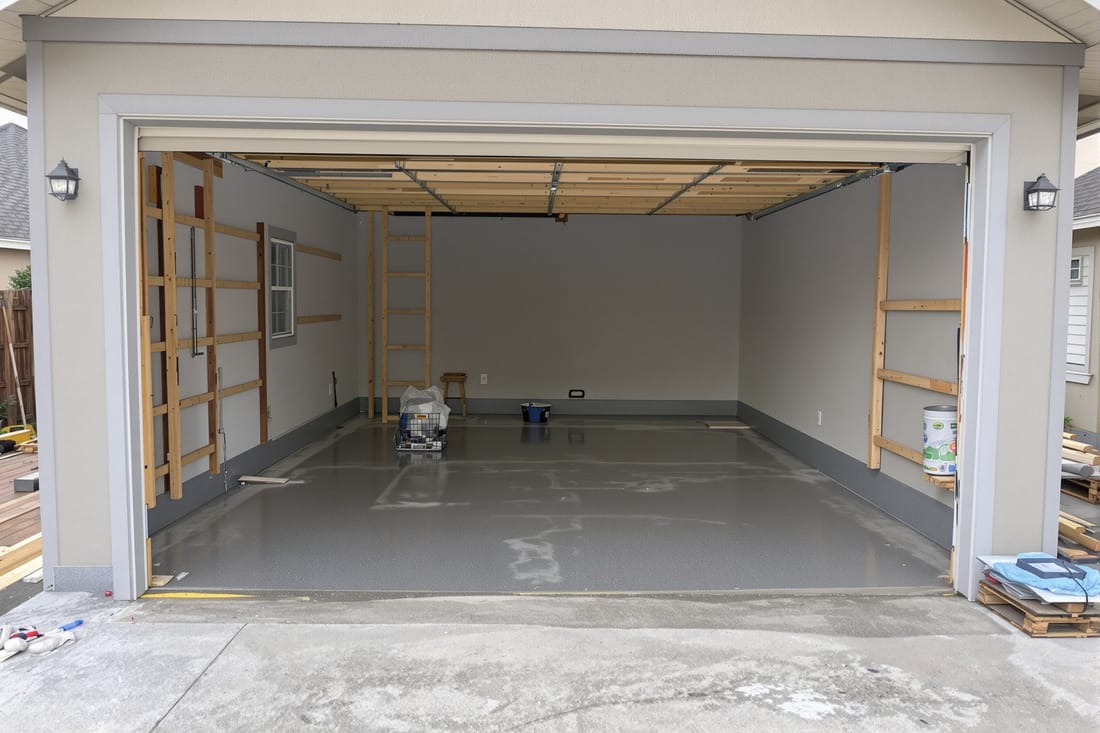
Durable concrete garage floors for Madison homes and businesses
A garage or shop floor in Madison has to deal with real abuse. Road salt, snowmelt, freeze-thaw cycles, dropped tools, and parked vehicles all put stress on the slab. Superior Concrete Madison installs concrete garage floors that are built around those local realities, not a generic plan from another climate.
For most residential garages in Madison we pour a 4 to 5 inch thick concrete slab over a compacted gravel base, with thickerened edges or pads where heavy loads are expected. For shops, heavier trucks, or equipment storage we may recommend 5 to 6 inches with closer rebar spacing. We discuss what you actually use the space for so the design matches the load, rather than guessing.
We are familiar with Dane County soil conditions and typical driveway and garage layouts. Many older Madison garages have shallow bases and thin, unreinforced slabs that have cracked from frost movement. When we replace or add a slab, we address drainage and base support first so the new concrete garage floor is not fighting the same issues that ruined the old one.
From the first visit we talk through vehicle sizes, shelving plans, floor drains, and whether you plan to heat the space later. That lets us plan slopes, joint locations, and reinforcement that will still work ten years from now if you upgrade to a heated workshop or add a lift.
How we build a concrete garage floor that survives Wisconsin winters
Every concrete garage or shop floor we install in Madison follows a clear process so you know what is happening at each step.
1. Site evaluation and layout. We start by checking access for trucks, measuring existing openings, and looking at how surface water currently drains around your garage. In neighborhoods near the lakes we often deal with higher groundwater and softer soils, which affects base prep depth and drainage planning.
2. Demolition and excavation. If you have an existing cracked or heaved slab we break it up, separate clean concrete for recycling, and haul it away. We then excavate to the depth needed for both gravel base and concrete thickness, usually 8 to 12 inches total depending on soil conditions.
3. Base and compaction. A solid base is what keeps a concrete garage floor from settling or cracking. We install 4 to 8 inches of compacted crushed stone or gravel, in layers, using plate compactors or rollers. On soft or clay-heavy soils that are common in parts of Madison we may use a geotextile fabric under the base to keep it from pumping or mixing with the subgrade.
4. Forming and reinforcement. We set wood or metal forms to correct height and slope, usually pitching the slab slightly toward the overhead door or to a floor drain where code allows. For reinforcement we typically use a grid of steel rebar or welded wire mesh, not just fiber alone, especially for shop floors that see jacks or heavy equipment. We place the steel on chairs so it ends up in the middle of the slab, not lying on the gravel.
5. Pouring and finishing. We use a concrete mix designed for Wisconsin freeze-thaw cycles, with air entrainment and an appropriate strength rating. Our crew places and screeds the mix, then uses power trowels as needed to achieve the finish you choose. We cut control joints at planned locations to guide natural cracking. For garages we are careful to align joints where tires track so the floor feels solid when you drive in.
6. Curing and sealing. Proper curing is as important as the mix itself. We use curing compounds or wet cure methods, then return to apply a sealer or coating if you choose that option. We walk you through when you can walk on it, move items in, and finally park vehicles, which in our climate is often around 7 days for light use and 28 days for full strength.
Finish, coating, and design options for garage and shop floors
Every concrete garage floor does not have to look the same. Superior Concrete Madison offers finish and coating options to match how you use your space and how much maintenance you are comfortable with.
For basic residential garages we often recommend a smooth troweled finish with a light broom texture at the overhead door where it meets the driveway. This gives enough traction when your tires are wet or snow packed, but is still easy to sweep and squeegee. For shops or hobby garages where you might be welding or working with chemicals, we pay attention to how the finish will interact with your planned coating.
If you want more protection from road salt and oil, we can apply a penetrating concrete sealer or install a full coating system. Options include epoxy, polyaspartic, or hybrid coatings with vinyl flake broadcast. Epoxy garage floor systems look good and make clean up simple, but they depend on good surface prep and moisture control, which we discuss honestly upfront.
We test for slab moisture and talk about your garage history, especially in older Madison homes where snow melt has nowhere to go and moisture can be persistent. If moisture levels are too high for a traditional coating to bond well, we can plan for vapor mitigation products or recommend a different approach, such as densifiers plus penetrating sealers.
For shops that see metal shavings, heavy jacks, or frequent impacts, we often steer clients to coatings with higher abrasion resistance or to a sealed, hardened concrete surface instead of a decorative system that could chip. We can also saw cut decorative borders, extend the slab to create a work apron outside the door, and coordinate with electricians or plumbers so floor penetrations and drains are exactly where you need them.
What affects the cost of a concrete garage floor in Madison
Homeowners often call us asking for a per square foot price for a concrete garage floor. The truth is that the final cost in Madison is driven by several specific factors, and understanding them helps you compare bids fairly.
Access and removal. If your garage is set back behind a house with tight side yards, or if the existing slab is thick and reinforced, removal and hauling costs go up. Easy access off an alley or driveway lowers labor and trucking time.
Base conditions. A flat, well drained site with decent existing base material is less expensive to prepare. If we find soft spots, organic material, or areas that have held standing water, we need to dig deeper, add more stone, or sometimes use fabric, which adds material and labor but prevents costly failures later.
Thickness and reinforcement. A single car garage that will never see more than a half ton pickup can usually use a standard thickness and light reinforcement. A two or three stall garage with a work truck, or a detached shop where you plan to use a lift or store heavy equipment, may justify thicker concrete and more steel. These upgrades add cost but are far cheaper than fixing a failed slab.
Finishes and coatings. A plain broom finish with a basic sealer is the most budget friendly. Epoxy or polyaspartic coatings, decorative flake, or specialty joint treatments add to the price. We break these items out clearly so you can decide if the look and maintenance benefits are worth it for how you use the space.
Timing and weather. In Madison we schedule around freeze-thaw and rain as much as possible. Spring and fall tend to book fast. If you need the work done in a tight window or in colder shoulder seasons, we might need additives, blankets, or tenting to protect the pour, which can modestly affect pricing. During an estimate Superior Concrete Madison explains what is really necessary for your specific project instead of automatically adding cold weather charges.
Common garage floor problems and how we prevent them
Most of the garage and shop floor work we do in Madison involves either replacing failed slabs or correcting design issues from earlier builds. Knowing what went wrong on those projects helps us keep the same issues from showing up in your new floor.
Premature cracking. All concrete cracks, but it should do so in predictable, controlled locations. Random cracks across the middle of the bay usually mean poor joint layout, thin sections, or weak base. We plan joint spacing, slab thickness, and reinforcement based on your layout, and we cut joints at the right time so the slab can relieve stress without making ugly, uneven cracks.
Salt and spalling damage. In our winters, salt carried in on vehicles soaks into the surface and, with freeze-thaw cycles, can cause the top layer to flake or pit. We choose mixes with air entrainment and recommend sealers that resist chloride penetration. We also advise you on maintenance, like how often to reseal and what de-icers to avoid, so you get the full life out of the new concrete garage floor.
Heaving and settlement. Many detached garages in older Madison neighborhoods were built on minimal base material. Frost can get under those slabs and lift them, or the soil settles and creates trip hazards at the door. When we replace those floors we increase base depth, fix drainage so water does not collect under the slab, and avoid tying the floor rigidly to unstable walls unless the structure is properly supported.
Drainage and slope issues. A floor that slopes the wrong way leaves you with puddles and ice near the back of the garage. We use lasers to set elevations so meltwater runs toward the door or a planned drain. Before we pour we have you look at form heights and talk through where water will actually go. That small step avoids a lot of future frustration.
By focusing on these real world problems, Superior Concrete Madison is able to deliver garage and shop floors that hold up under the specific conditions we see here, from January freeze to July thunderstorms.